
P.O. Box 3558
Chapel Hill, NC 27515-3558
Strowd Roses, Inc. is a 501(c)(3) nonprofit organization.


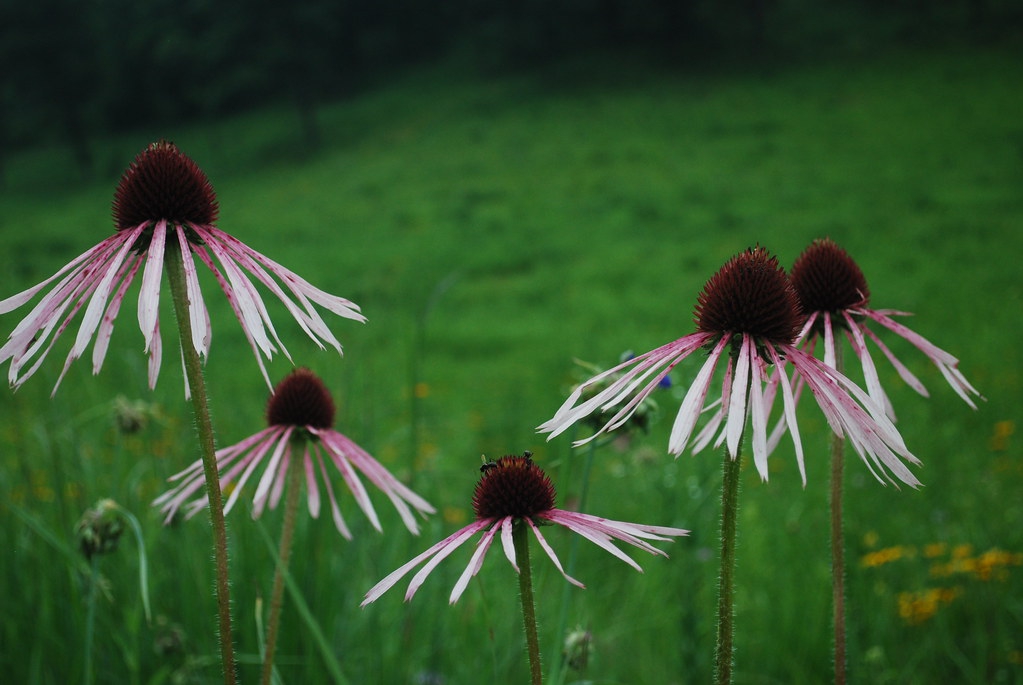
Echinacea pallida, commonly known as Pale Purple Coneflower, is a striking, deeply taprooted perennial native to the tallgrass prairies of the central United States. It is easily distinguished from other coneflowers by its long petals that droop downward from a reddish-brown cone. Blooming from early to mid-summer, the solitary flower heads sit atop tall distinctly bristly stems, with foliage concentrated mostly near the base of the plant. Its minimalist structure brings a graceful element to the landscape.
P.O. Box 3558
Chapel Hill, NC 27515-3558
Strowd Roses, Inc. is a 501(c)(3) nonprofit organization.

 Cardoon